Why Anemia Diagnostic Navigator?
Real-World 2-Stage Outpatient Triage
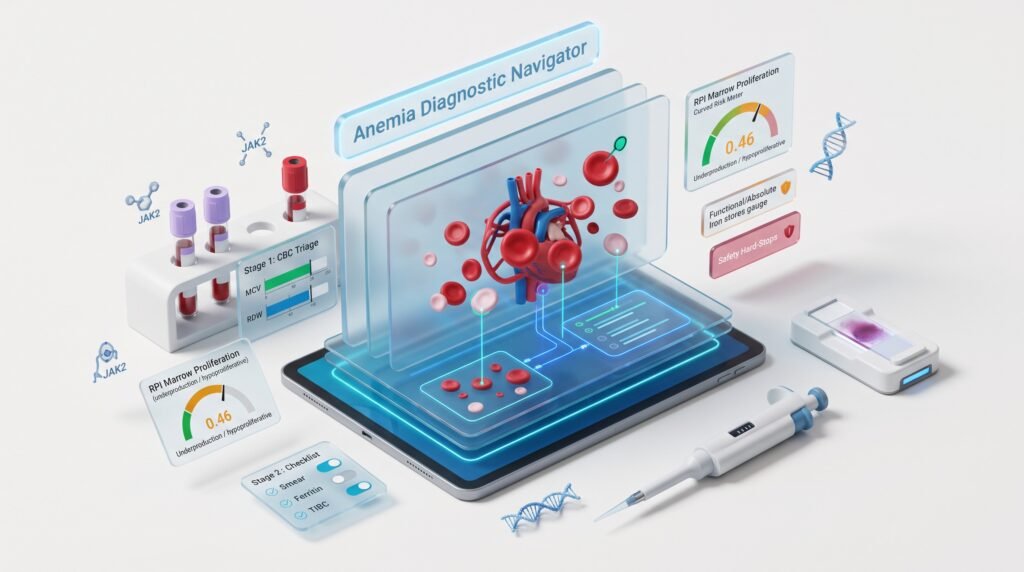
Mirrors genuine primary care workflow: classifies morphological cell size and marrow response from initial CBC/Reticulocyte labs during Visit 1, withholding reflex iron panels and peripheral smear reviews until follow-up results return.
Automated Indices & Dynamic Order Sets
Instantaneously calculates the Reticulocyte Production Index (RPI) using the Finch hematocrit correction and the Mentzer Index (MCV/RBC). Dynamically exposes only pathway-relevant history and Tier-2 lab order recommendations.
Persistent Safety HUD & Hard-Stops
Real-time diagnostic heads-up display evaluates critical red flags on every input change, screening for marrow infiltration, acute hemolysis, pancytopenia, and hemodynamic instability to ensure safe outpatient management.
Clinical Workflow: 3-Module Architecture
Module 1: Stage 1 CBC & Reticulocyte Triage (Initial Visit)
- Baseline Indices Entry: Enter Hgb, MCV, RDW, uncorrected Reticulocyte %, RBC Count, Hematocrit, WBC, and Platelets.
- Automated Morphological Classification: Microcytic (<80 fL), Normocytic (80–100 fL), or Macrocytic (>100 fL).
- Marrow Proliferation Assessment: Real-time RPI calculation stratifying hypoproliferative impaired production (<2.0) from hyperproliferative compensation or acute destruction (≥2.0).
- Tailored Clinical Inquiries: Surfaces targeted historical screens (e.g., menorrhagia and GI bleed flags for microcytic; paresthesias, alcohol, and metformin exposure for macrocytic).
- Targeted Reflex Order Sets: 1-click evidence-based laboratory workup recommendations specific to the active morphological branch.
Module 2: Stage 2 Reflex Labs & Peripheral Smear (Follow-Up Visit)
- Iron Classification Engine: Distinguishes absolute iron deficiency (depleted stores) from functional iron deficiency (reticuloendothelial block / anemia of chronic disease), calibrated for HF, CKD, and inflammatory baselines.
- Reflex Metabolic Panel: Integrates Vitamin B12, MMA, Homocysteine, Folate, TSH, eGFR, and hemolysis workup markers (LDH, Haptoglobin, Direct Antiglobulin Test).
- Single-Line Smear Flags: Rapid manual checklist for high-stakes microscopic morphology, including schistocytes, tear drop cells, hypersegmented PMNs, and circulating blasts.
Module 3: Output Generation & Clinical Synthesis
- Adaptive EHR Dotphrase: Dynamically compiles structured clinical documentation reflecting whether the patient is in the initial “Workup Phase” or “Definitive Diagnostic Phase.”
- Targeted Repletion Protocols: Delivers guideline-directed management routes, including alternate-day oral iron dosing schedules and referral thresholds.
- Patient-Facing Educational Handout: Accessible, non-alarmist explanation demystifying lab findings, iron stores, and upcoming evaluation steps.
How to Use the Anemia Diagnostic Navigator in Practice
- Select or Input Baseline CBC: Choose a preloaded 15-minute clinical preset or directly enter the patient’s CBC and reticulocyte values in the Stage 1 input panel.
- Review Morphological & Proliferation Output: Note the automated MCV size category, Mentzer Index discrimination, and RPI marrow response output in the Diagnostic Decision HUD.
- Execute Targeted Pathway History & Orders: Review the dynamically generated checklist for relevant clinical risk factors and place the recommended Tier-2 laboratory order set.
- Enter Reflex Results at Follow-up: Once secondary testing returns, expand Stage 2 to input ferritin, TSAT, iron studies, or peripheral smear flags for automated definitive etiology classification.
- Export Clinical Documentation: Navigate to the EHR Note & Handout tab to copy the formatted diagnostic summary into your clinical chart and print the patient education instructions.